GV-FOR-BX · Nematode
Pine Wood Nematode Detection Kit
High-Sensitivity Field Nucleic Acid Test Kit
Target: Bursaphelenchus xylophilus.
IFU sample types: pine sawdust, nematode suspension, individual nematodes, and other sample types.
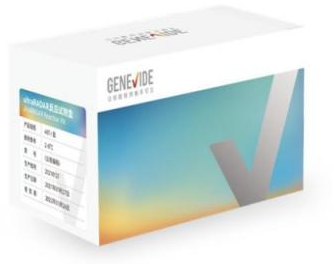
Product overview
GeneVide Bursaphelenchus xylophilus Pine Wood Nematode Test Kit · GV-FOR-BX
This kit amplifies nucleic acid sequences specific to Pine Wood Nematode and uses directional signal amplification technology to achieve high-sensitivity detection of the target nucleic acid. Applicable sample types: pine sawdust, nematode suspension, individual nematodes, and other sample types.
Package specification in the IFU
16 tests/box
The IFU describes the individual box. Confirm the current sales-pack quantity, price, shipping, and availability on the linked eBay listing before purchasing; an order may contain multiple boxes.
Test principle
This kit amplifies nucleic acid sequences specific to Pine Wood Nematode and uses directional signal amplification technology to achieve high-sensitivity detection of the target nucleic acid.
Kit components
Table 1. Main components
| No. | Component | Main ingredients | Specification | Qty. |
|---|---|---|---|---|
| 1 | BX enzyme pellet | Primers, probe, endonuclease, deoxyribonucleoside triphosphates, polymerase | 16 tests/pack | 1 |
| 2 | BX positive control | Target plasmid containing the target fragment and internal-control plasmid | 280 μL/tube | 1 |
| 3 | Negative control | Nuclease-free water | 280 μL/tube | 1 |
| 4 | Lysis solution | Buffer, resin | 16 tubes/bag | 1 |
| 5 | Diluent | TE buffer, etc. | 16 tubes/bag | 1 |
| 6 | Sampling spoon | — | 16 pcs/bag | 1 |
Storage and shelf life
Store at 2–8°C. Shelf life: 12 months.
Workflow and result interpretation
These instructions are specific to Pine Wood Nematode. Follow the full IFU, including controls and precautions. Reaction thresholds are not total sample-to-result times.
Extraction Procedure
- Before starting the test, turn on the metal dry bath, set it to 95°C, and begin heating.
- Remove the required lysis-solution tubes (green screw-cap microcentrifuge tubes) and diluent tubes (natural-color microcentrifuge tubes), and flick downward 3 times.
- Prepare the sample as follows: Sawdust sample—place half a level spoonful of sawdust on weighing paper, transfer the sawdust into the lysis solution, tighten the cap, mix by shaking up and down for 10 cycles, and flick by hand 3 times so the sawdust is wetted by the lysis solution. Nematode suspension—under a stereomicroscope, pick one nematode or directly add 50 μL of nematode suspension to the lysis solution; tighten the cap, mix by shaking up and down for 10 cycles, and flick by hand 3 times.
- Incubate the lysis-solution tube in the metal dry bath at 95°C for 5 min. Remove and let stand at room temperature for 2 min. Flick the tube downward 3 times, transfer 50 μL of supernatant along the lower-middle wall of the diluent tube, close the cap tightly, mix by shaking up and down for 10 cycles, and flick gently 3 times to collect the liquid at the bottom. Use this as the nucleic acid solution for subsequent testing.
Test Procedure
- Transfer 50 μL of the nucleic acid solution prepared above along the middle wall of an enzyme-pellet tube. After all enzyme-pellet tubes have been loaded, visually confirm that the nucleic acid solution has contacted and completely dissolved the enzyme pellet.
- Close the strip-tube cap. Hold the cap and bottom of the strip tube with the thumb and index finger, respectively, mix by shaking up and down for 10 cycles, and flick downward gently 3 times to collect the liquid at the bottom. Place the strip tube in the palm-sized fluorescence detector for testing.
Note: Manual mixing is a critical step. Before starting the test, make sure the strip-tube cap and the lid of the palm-sized fluorescence detector are closed tightly.
Result Interpretation
At the end of the test program, the palm-sized fluorescence detector automatically analyzes and determines the result.
Table 2. Result interpretation for the palm-sized fluorescence detector
| Assessment | TT display | Displayed result |
|---|---|---|
| Negative control | — | NC |
| Positive control | TT ≤ 10 | PC |
| Positive sample | TT ≤ 20 | Positive |
| Negative sample | — | Negative |
Equipment and Consumables Required but Not Provided
- Personal protective equipment (disposable laboratory gloves, laboratory coat, protective eyewear, etc.).
- Liquid-waste container and disinfectant.
- Timer.
Precautions
- Do not use expired reagents.
- Perform the entire procedure in a nuclease-free environment.
- Wear powder-free gloves when handling reagents and nucleic acids.
- To avoid cross-contamination, filtered pipette tips are recommended.
- All sample tubes, centrifuge tubes, tips, reagents, and test tubes are single-use.
- Do not mix reagents from different product lots.
Instructions for Use (IFU)
IFU revision: June 2, 2026. English translation based on the corresponding Chinese instruction sheet.
Download English IFUChinese IFU (PDF)
Can I use a different sample type?
The stated sample types are pine sawdust, nematode suspension, individual nematodes, and other sample types. Contact the product team before using an unlisted sample or modifying the procedure.
Does this kit include the detector?
No. The portable platform is listed separately. Consult the components table and IFU for what is supplied with the reagent kit.
Selection and purchasing questions
Can I submit wood directly to the detector?
No. The IFU provides separate preparation routes for pine sawdust and nematode material. Prepare the nucleic acid solution before loading the assay; do not put untreated wood into the fluorescence reader.
What should I include in a Pine Wood Nematode Test Kit inquiry?
Include SKU GV-FOR-BX, your actual specimen (the IFU lists pine sawdust, nematode suspension, individual nematodes, and other sample types), testing volume, existing equipment and destination. Confirm the sales-pack quantity separately from the individual-box specification in the IFU.
Discuss your testing requirements
Include your target, sample type, expected testing volume, and destination. This opens your email application; nothing is submitted until you send the email.
Request a quote by emailNeed help choosing? Use Ask GeneVide AI for product information; confirm critical decisions with the product team.